Boston, MA – Massachusetts economic development leaders and policymakers gathered last week to learn and discuss solutions for a wave of aging small business owners who are expected to retire across the state without a succession or exit plan, threatening the loss of businesses and jobs.
More than 10,000 businesses close each year in Massachusetts, and longtime businesses are increasingly responsible for the closures as a wave of baby boomer business owners are retiring at an increasing rate in the state and across the Northeast. By 2040, we expect 100,000 ownership exits from small business owners retiring. Many of these businesses are strong candidates for employee ownership, representing more than $30 billion in business that could be worker-owned. However, these business owners often don’t understand the process or their options and don’t know where to turn for help.
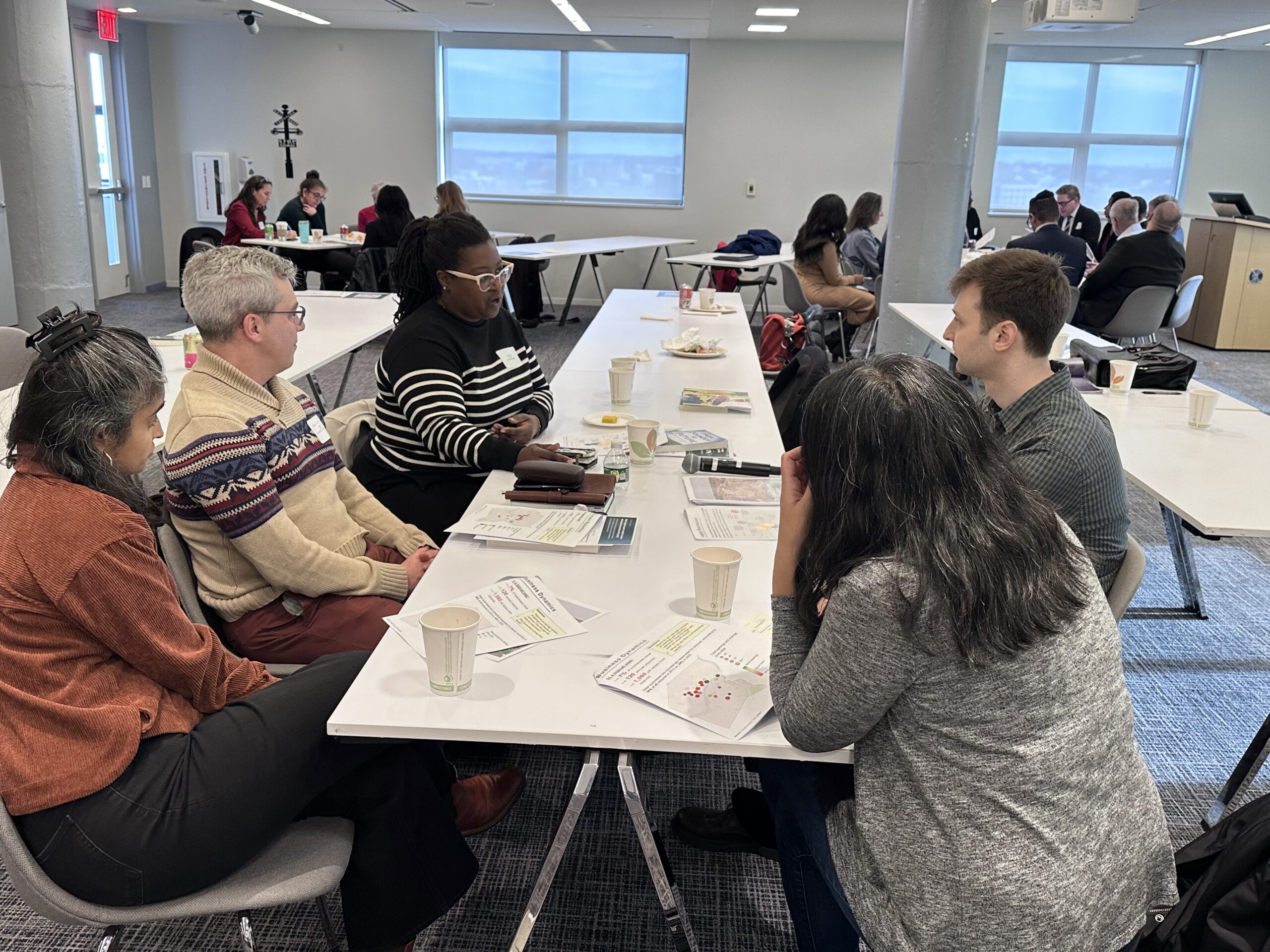
About 50 business experts and policymakers attended the event on Tuesday, November 10 at the JPMorganChase office at 70 Fargo St. in Boston. The event was organized by the Northeast Transition Initiative (NETI), a partnership of organizations sharing a common goal to build a skilled and informed network of service providers and community advocates to increase support for small business owners looking to retire and transition out of their businesses.
The event was funded by a JPMorganChase grant, of which the Cooperative Development Institute is the grantee. JPMC this year kicked off a Boston-wide initiative to strengthen small businesses in the Boston-metro area.
Those in attendance included representatives from the Commonwealth of Massachusetts, the City of Boston, the City of Cambridge, the Greater Lowell Chamber of Commerce, MassDevelopment, Federal Reserve Bank of Boston, Black Economic Council of Massachusetts, Massachusetts Small Business Development Center, Boston Impact Initiative, the Boston Main Streets Foundation, the Cooperative Fund of the Northeast, and more.
“We’re combining in-depth training and local-level advocacy to build a network of engaged, skilled champions for exit planning and employee ownership in the region,” said Rob Brown, Director of Business Ownership Solutions at the Cooperative Development Institute. “This network of champions will help us engage with municipal, business, and civic leaders about the impact of business succession in their communities and build support for policies and initiatives that expand awareness and services at the local level.”
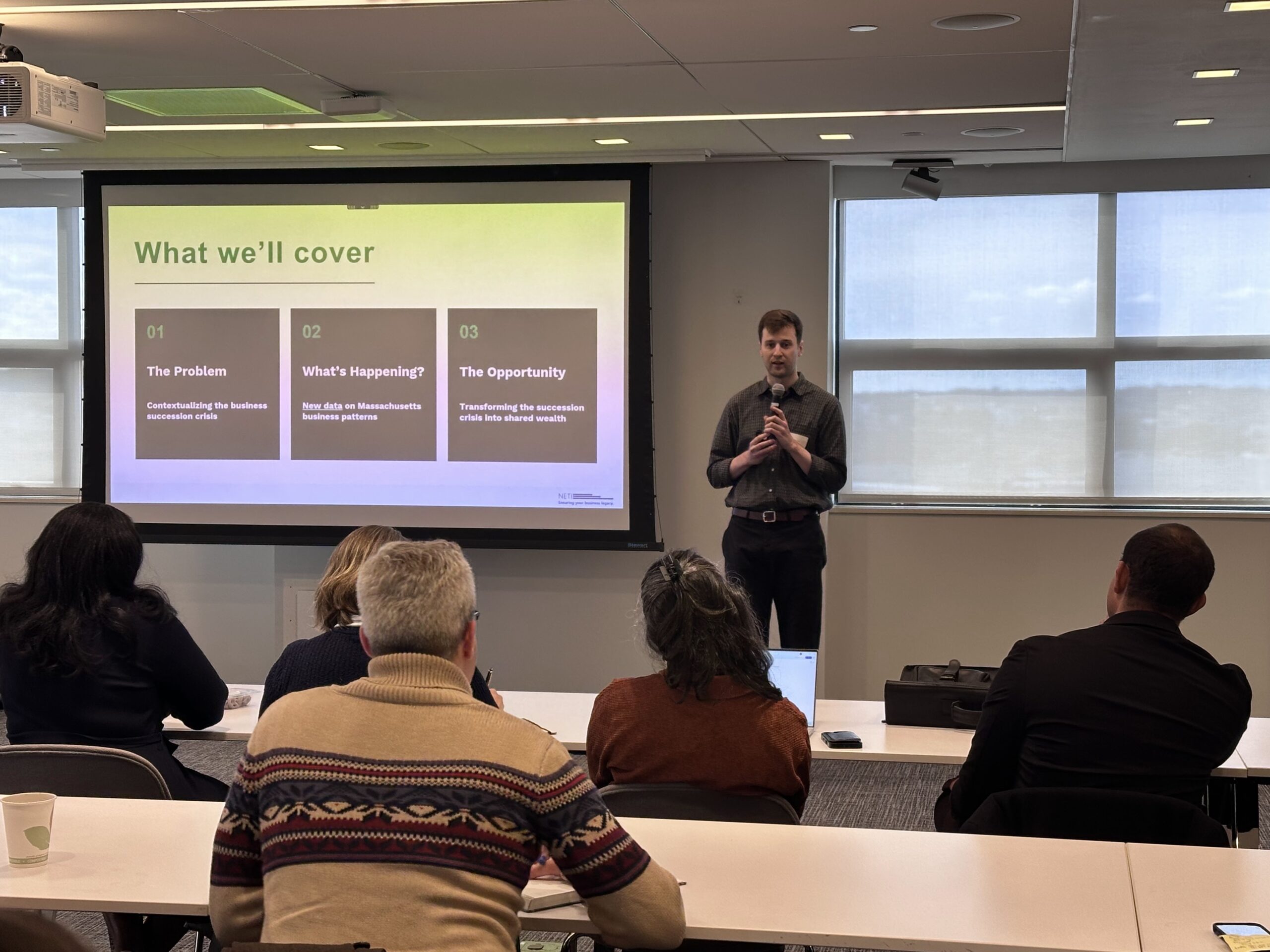
The event began with a presentation by Chris Carley, who led a research team at the ICA Group in building a new picture of business closures and ownership transitions across Massachusetts. The team combined private, establishment-level business data with a range of public sources, producing a first-of-its-kind analysis of the opportunity for employee ownership in Massachusetts. The team also produced detailed findings for Boston, Cambridge, Lawrence, and Lowell, including neighborhood-level maps of closures and transition risk, to guide local conversations and planning.
“This is the first of many analyses the team aims to produce for states and communities across the Northeast, and the team is continuing to research how employee ownership can build wealth for workers and keep businesses rooted in their communities,” said Chris Carley.